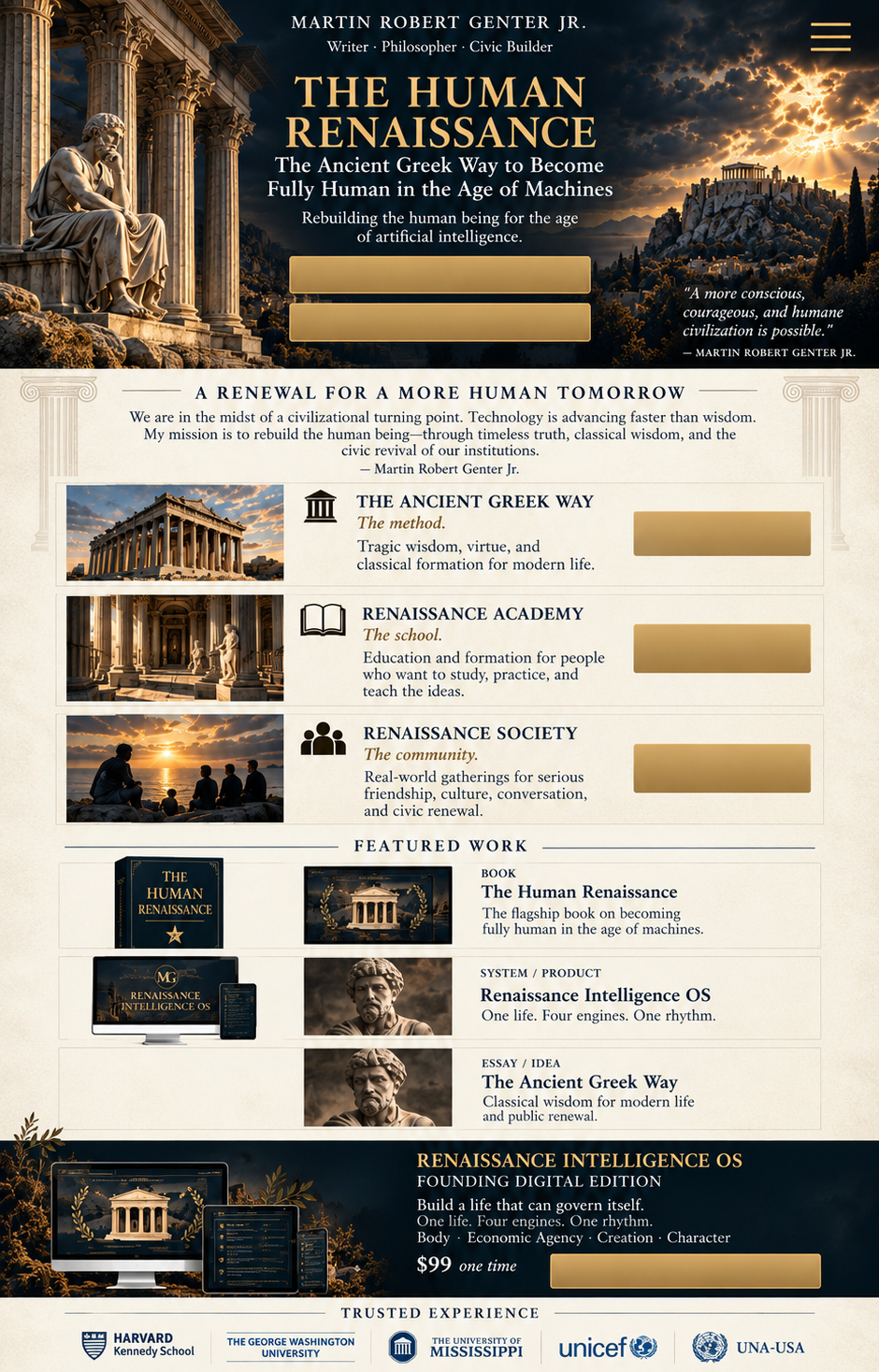
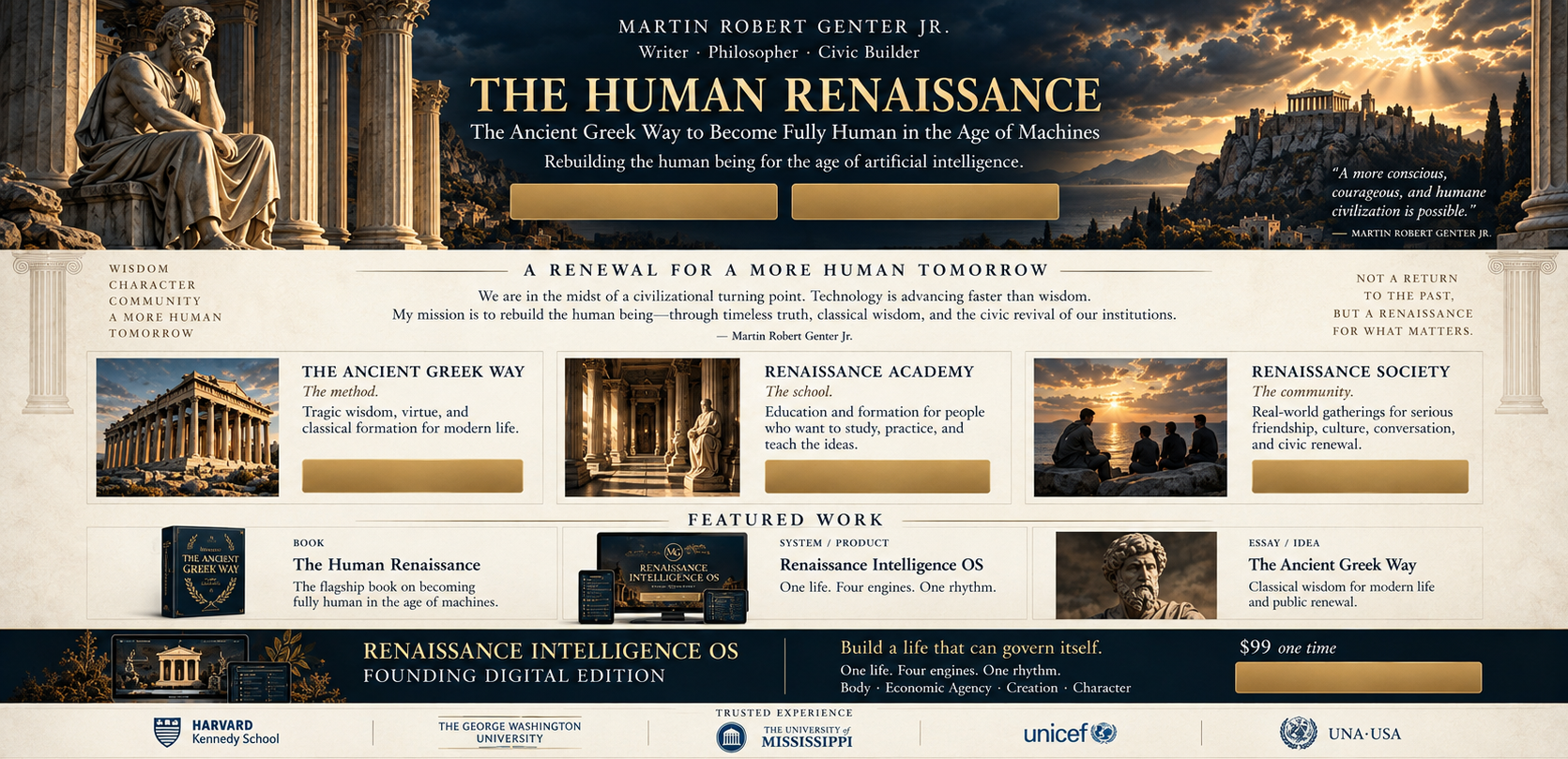
Featured Products
We have become astonishingly powerful.
We have not yet decided what all that power is for.
Artificial intelligence can increasingly write, reason, calculate, imitate, persuade, create, and remember. Our technologies are accelerating faster than our institutions, our attention, and perhaps our wisdom. We possess capabilities that earlier civilizations would have mistaken for the powers of gods while remaining vulnerable to the oldest human failures: pride, appetite, fear, faction, loneliness, cruelty, self-deception, and the hunger for meaning.
The Human Renaissance begins with a wager:
The decisive question of the age of machines is not what machines will become.
It is what human beings will become beside them.
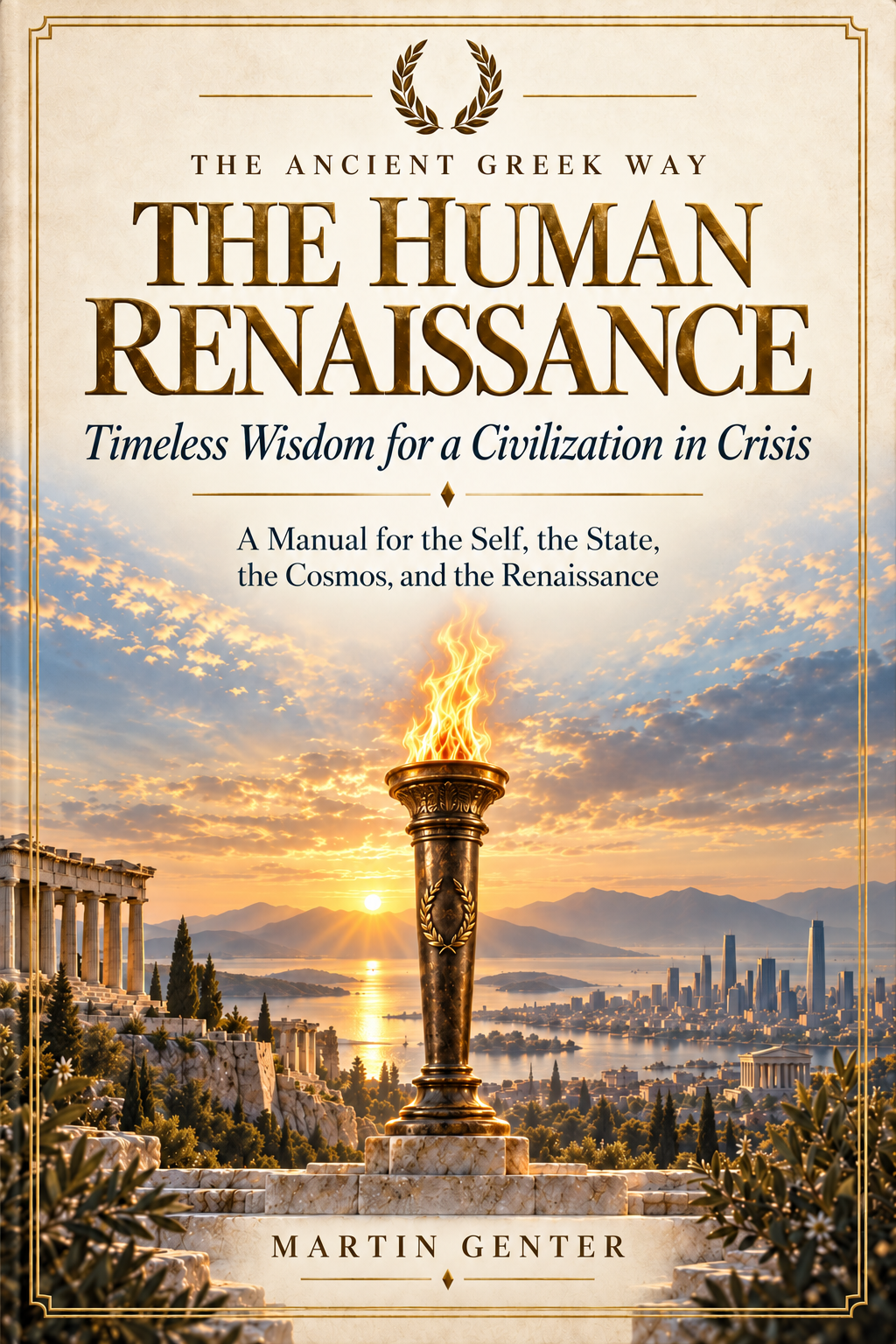
Across 120 concise, illustrated meditations, Martin Genter returns to the civilization that first confronted many of these questions with unusual clarity. Socrates asks whether a life can be examined honestly. Aristotle asks what human flourishing requires. Homer asks what rage, loyalty, homecoming, and mortality do to us. Greek tragedy asks what happens when power exceeds wisdom. The polis asks what citizenship demands. The night sky asks where humanity belongs in a cosmos far larger and stranger than our ancestors could have imagined.
But this is not an escape into antiquity.
Ancient Greece becomes a lens through which to examine the most urgent problems of the present: attention and addiction, character and ambition, friendship and loneliness, rhetoric and manipulation, democracy and faction, leadership and power, science and meaning, artificial intelligence and stewardship, mortality and transcendence.
The journey unfolds through four great questions:
How shall I govern myself?
How shall we govern ourselves together?
What kind of world have we awakened inside?
And what shall we do with what we have inherited?
The result is part philosophy, part civic manual, part meditation on civilization, part illustrated book of formation.
Its argument is both ancient and radically contemporary:
A technological renaissance without a human renaissance will not be enough.
The future does not merely need smarter machines.
It needs deeper human beings.
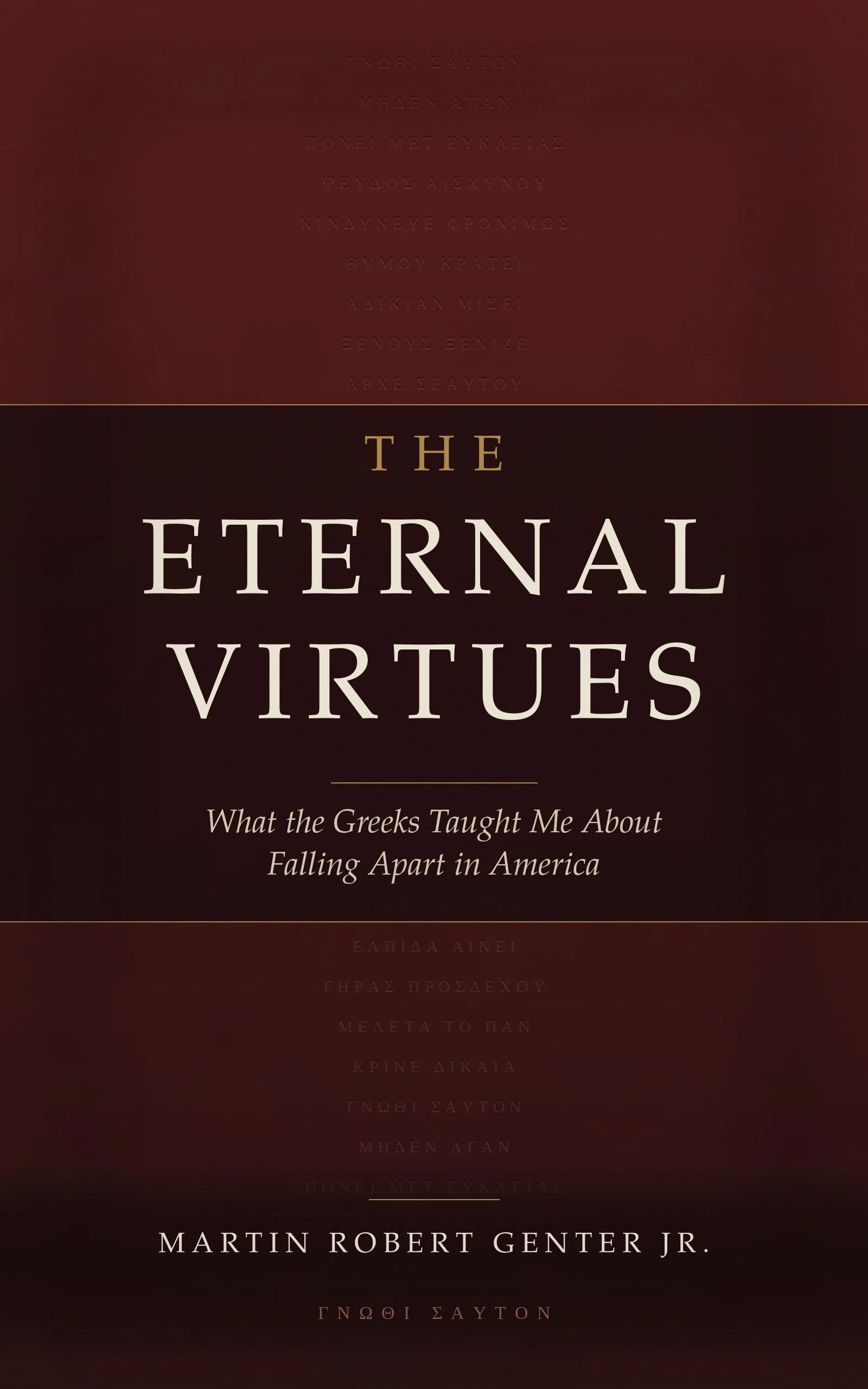
What kind of person must we become to be trusted with freedom and fire?
We have built a civilization of extraordinary power. We can command machines, manipulate attention, cross oceans in hours, summon nearly the whole record of human knowledge from a screen, and place increasingly powerful artificial intelligence into the hands of ordinary people.
But power does not form character.
In Eternal Virtues, Martin Genter returns to an older question: What qualities must a human being cultivate in order to use freedom, ambition, technology, love, money, influence, and suffering without being mastered by them?
The answer is not another collection of inspirational quotations. It is formation.
Twelve virtues form the architecture of the book: Truth, Attention, Judgment, Courage, Endurance, Temperance, Justice, Mercy, Love, Excellence, Stewardship, and Gratitude.
They are organized around four great disciplines: see truly, step bravely, remain human, and build worthily.
Drawing from ancient Greek philosophy and tragedy, Christianity, Judaism, Buddhism, Confucian thought, history, psychology, science, habit formation, civic life, and personal experience, Genter searches for the places where civilizations separated by centuries nevertheless discovered something enduring about human character.
But convergence does not mean sameness. The traditions are allowed to disagree.
And every chapter eventually leaves the library.
Each virtue must descend into conduct: a decision, a habit, a conversation, a restraint, a promise, an act of courage, a form of service. Because a virtue admired but never practiced is merely an ornament.
Eternal Virtues is therefore both a work of moral philosophy and a field manual for becoming someone others can trust.
The defining problem of the coming age may not be whether human beings become powerful enough.
We already are.
The question is whether we will become wise enough, courageous enough, loving enough, and disciplined enough to carry the fire without burning down the house.
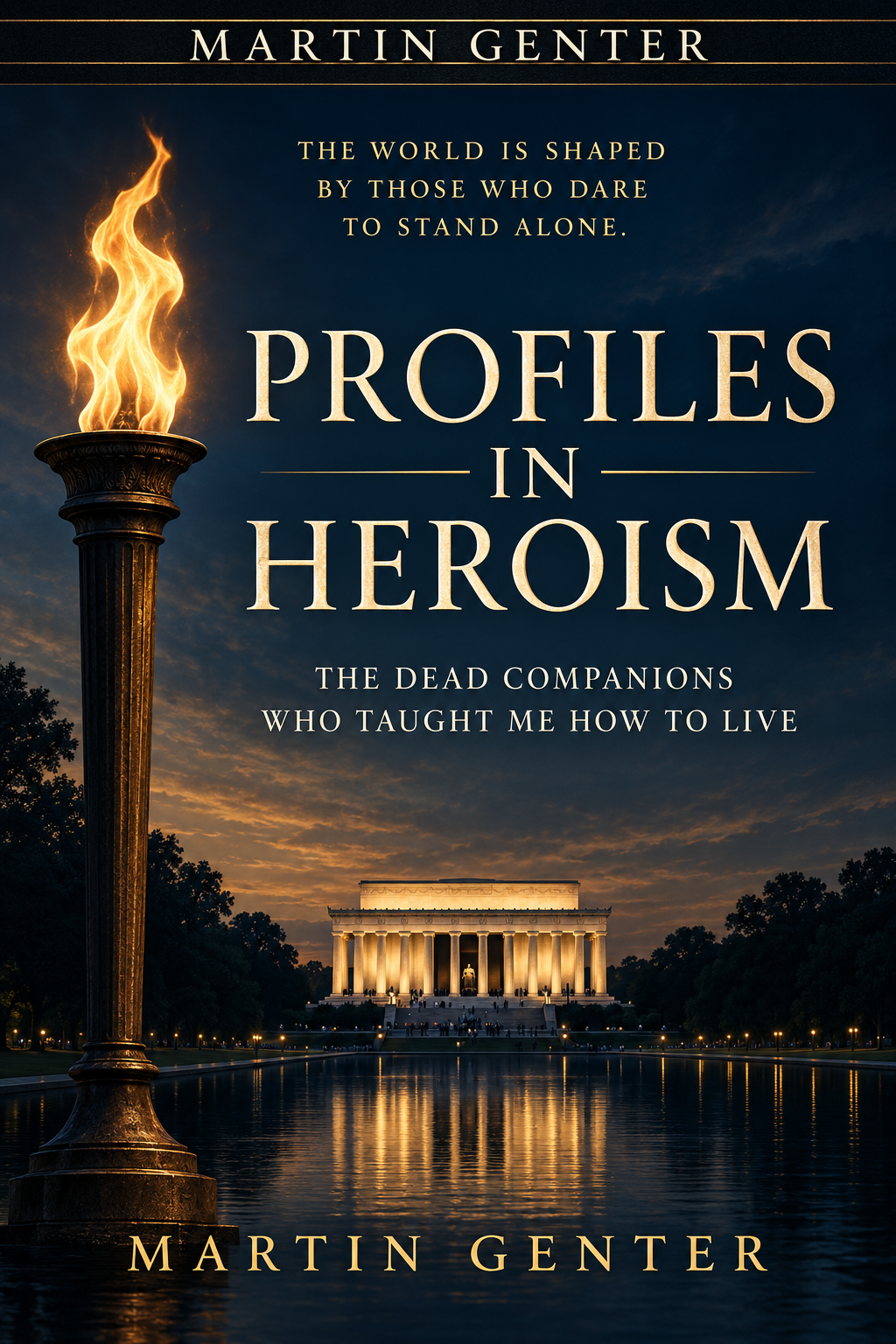
What if some of the people who teach us most about how to live are already dead?
In Profiles in Heroism: The Dead Companions Who Taught Me How to Live, Martin Genter turns to the figures who became his companions through failure, grief, ambition, doubt, and the long work of becoming useful to others.
John F. Kennedy taught the discipline of elevation. Robert F. Kennedy showed how grief can deepen rather than destroy a human being. Martin Luther King Jr. demonstrated the terrible cost of loving a country enough to confront it. Abraham Lincoln revealed the endurance required to carry a divided republic without pretending that history offers clean choices. Ulysses S. Grant embodied duty without theater, perseverance after failure, and magnanimity after victory.
But this is not a book of saints carved in marble.
Their contradictions remain. Their failures remain. Their compromises, wounds, ambitions, and limitations remain. That is precisely why their lives still matter.
Blending biography, memoir, history, classical wisdom, and civic reflection, Genter asks a harder question than whether these people were admirable: What did courage require when the consequences were real?
And what does it require of us?
The final profile belongs not to a president, general, or martyr, but to the ordinary person who teaches, raises a family, protects a stranger, keeps a promise, serves a community, tells the truth when silence would be easier, or simply refuses to become cruel.
Heroism, this book argues, is not celebrity. It is disciplined service under pressure.
The dead cannot make our choices for us. They cannot repair our republic, keep our promises, confront our fears, or carry the burdens that have arrived in our generation.
But they can leave us a standard.
And sometimes, if we listen closely enough, the dead can teach us how to live.
Meet the Founder
I have spent much of my adult life circling a single question:
What kind of human being remains free, courageous, humane, and useful in an age of extraordinary power?
That question has carried me through politics and classrooms, campaigns and books, public service and private failure, ancient tragedy and artificial intelligence.
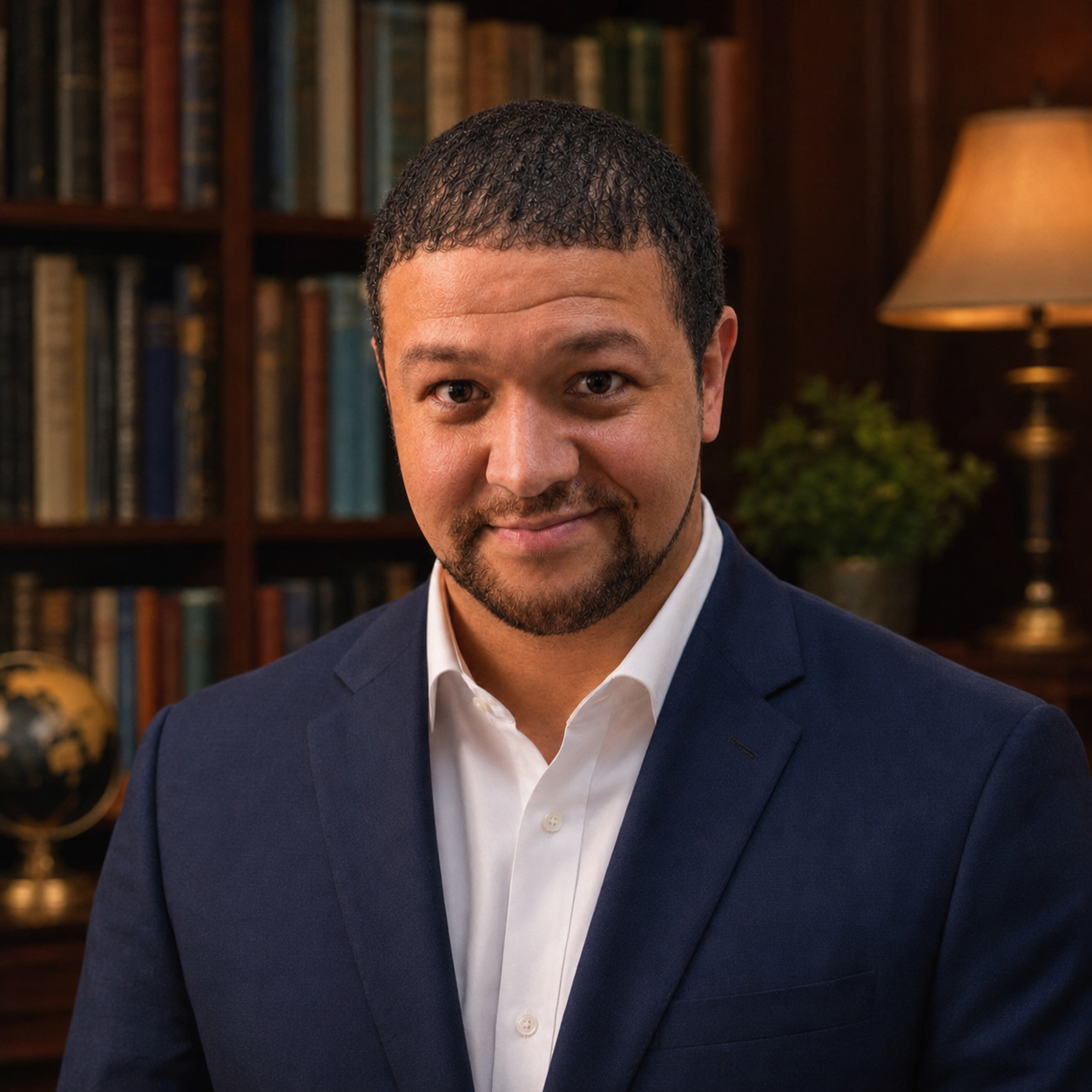
I am Martin Robert Genter Jr. — a writer, philosopher, educator, and civic leader working where classical wisdom, public life, and the human consequences of technology meet.
My path has never belonged neatly to one profession.
I studied political science and history at the University of Mississippi and political management at George Washington University. My formation continued at Harvard Kennedy School Executive Education, and in 2026 I was elected to the Harvard Kennedy School Washington, D.C. Alumni Council, where I serve as Secretary.
But most of what has formed me happened beyond universities.
I have worked in congressional politics; advocated for children and international cooperation through UNICEF USA and the United Nations Association; taught history and social studies in a diverse Detroit-area school; advised political and civic efforts; and run for office myself. In 2021, I entered a contested Democratic primary for the Michigan State Senate and won 70.5 percent of the vote.
That taught me what books alone cannot: ideas eventually have to meet human beings. They have to survive a doorstep, a classroom, a disagreement, an election, a disappointment, a promise, a Tuesday morning.
I remain fascinated by politics. I no longer believe public office is the only measure of public usefulness.
The deeper work is formation.
For years I have returned to the Greeks — above all to tragedy — because they refused to evade what modern culture works hard to avoid: suffering, limits, pride, ambition, mortality, responsibility, and the terrible difficulty of governing oneself before attempting to govern anything larger.
That study became The Ancient Greek Way, my central philosophical and literary project: an attempt to recover the wisdom of the ancient world not as museum culture, but as equipment for living.
Around it sits a larger idea I call The Human Renaissance.
The premise is simple. Humanity has become astonishingly good at increasing its power. We are far less certain we have become equally good at forming the human beings who must wield it. Artificial intelligence makes that imbalance impossible to ignore.
So the question before us is larger than how to build more capable machines. It is how to cultivate more capable people — with judgment, courage, self-command, imagination, compassion, civic responsibility, and enough humility to live with powers their ancestors could scarcely imagine.
That work now takes several forms: books and essays, public teaching, the Renaissance Academy, the Renaissance Societies, and practical systems that help people turn ideas into lived practice.
Beneath all of them lies one conviction:
A civilization can rise only as high as the human beings it forms.
I do not approach that conviction from a pedestal. My own life holds achievement and failure, ambition and exhaustion, public victories and private reckonings. I have learned that philosophy means very little if it cannot survive ordinary life — marriage, health, money, disappointment, work, friendship, responsibility, and the promises we make when nobody is applauding.
That is why I am less interested in appearing finished than in doing the work faithfully:
To write. To teach. To convene. To serve.
To build institutions worthy of the people who enter them.
And to contribute, however imperfectly, to a renewal of human dignity and civic life in an age that will test both.
That is the work of the Human Renaissance — and the work to which I have given my life.